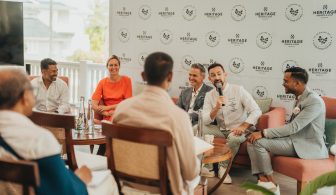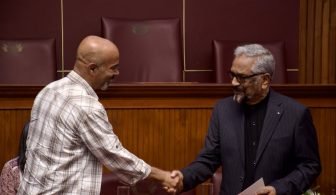


Le groupe Beachcomber Resorts & Hotels initie un programme de restauration et de préservation des coraux dans le lagon du Morne, en partenariat avec l’ONG Reef Conservation et l’Union européenne. Le lancement officiel du projet Land Based Coral Culture for Restoration, Conservation and Education a eu lieu ce vendredi 21 juin 2024 au Paradis Beachcomber Golf Resort & Spa, en présence de l’Ambassadeur de l’UE, Oskar Benedikt, du président de la Reef Conservation, François Rogers, et du CEO du Groupe Beachcomber, Stéphane Poupinel de Valencé. Cette initiative prévoit la création d’une pépinière de coraux terrestre et la mise en place d’un espace pédagogique pour sensibiliser à la protection de la biodiversité marine.
« La sauvegarde des récifs coralliens est un enjeu crucial pour Maurice. La destination mauricienne, reconnue pour la beauté de son lagon et sa riche biodiversité marine, subit une dégradation accélérée de ses coraux ces dernières années. En tant que pionnier et leader de l’hôtellerie à Maurice, Beachcomber a le devoir d’agir pour préserver cet écosystème marin, essentiel à notre industrie. Nos établissements hôteliers, étant surtout des resorts hotels, nous sommes très conscients de l’impact du changement climatique et de l’importance de la préservation de la biodiversité marine. Ce programme mené en partenariat avec la Reef Conservation et l’UE nous permettra de mettre en place des actions concrètes pour restaurer et régénérer les coraux, piliers de l’écosystème marin », a déclaré Stéphane Poupinel de Valencé. Le CEO du Groupe Beachcomber rappelle que la préservation de la biodiversité est l’un des 8 piliers de la Charte Environnementale et Sociétale des 52 Engagements de Beachcomber.
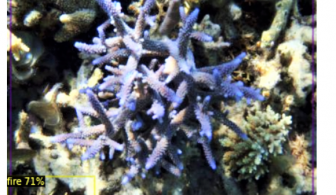
Le projet de création d’un sanctuaire de coraux au Paradis Beachcomber Golf Resort & Spa est parti d’un constat préoccupant. L’île Maurice possède 243 km2 de lagon, protégé par 150 m de récifs, abritant 159 variétés de coraux et 340 espèces de poissons. Ces fonds coralliens sont aujourd’hui fortement dégradés et menacés, dû en grande partie aux phénomènes de blanchissement en 1998, 2003, 2004, 2009, 2016 et 2018, liés au réchauffement climatique. La couverture corallienne vivante autour de l’île est passée de 50 % en 2002 à environ 20 % en 2018. De plus, des études récentes indiquent que plusieurs espèces de coraux sont devenues rares et sont menacées d’extinction localement.
Pour répondre à cette situation et contribuer à inverser cette tendance, l’initiative Land Based Coral Culture for Restoration, Conservation and Education vise quatre objectifs : établir un inventaire des coraux, instaurer un sanctuaire pour ces organismes marins, développer un centre éducatif pour sensibiliser et éduquer, et créer des Zones Volontaires de Conservation Marine pour protéger la biodiversité.
D’une durée de cinq ans, le projet sera mené en trois phases. La première étape, permettra d’établir un inventaire complet des coraux et d’identifier les zones les plus propices à leur restauration. La seconde étape comprendra l’aménagement d’une pépinière de coraux au Paradis Beachcomber pour cultiver les coraux rares avant de les transplanter sur des récifs naturels. La construction de la pépinière démarrera en début de l’année prochaine et sera opérationnelle dès 2026. L’objectif est de produire suffisamment de coraux pour restaurer au moins 0, 8 hectares de récifs au cours des quatre prochaines années. Enfin, le troisième volet, intègre une dimension pédagogique, avec l’ouverture d’un centre au Paradis Beachcomber pour sensibiliser et éduquer les communautés, ainsi que le grand public à l’importance du système de récifs coralliens. Le centre accueillera les équipes hôtelières, les clients et les habitants de la région pour des ateliers de sensibilisation sur l’importance des récifs.
Beachcomber commits to the restoration and preservation of coral in Le Morne Lagoon
Beachcomber Resorts & Hotels is launching a programme to restore and preserve the coral in Le Morne Lagoon, in partnership with the NGO Reef Conservation and the European Union. The official launch of the Land Based Coral Culture for Restoration, Conservation and Education project took place on Friday 21 June 2024 at the Paradis Beachcomber Golf Resort & Spa, in the presence of the EU Ambassador, Oskar Benedikt, the President of Reef Conservation, François Rogers, and the CEO of the Beachcomber Group, Stéphane Poupinel de Valencé. The initiative includes the creation of a land-based coral nursery and an educational area to raise awareness of the need to protect marine biodiversity.
« Safeguarding coral reefs is a crucial issue for Mauritius. The Mauritian destination, renowned for the beauty of its lagoon and its rich marine biodiversity, has seen its coral reefs deteriorate rapidly in recent years. As a pioneer and leader in the hotel industry in Mauritius, Beachcomber must act to preserve this marine ecosystem, which is essential to our industry. As our hotels are mainly resorts, we are very aware of the impact of climate change and the importance of preserving marine biodiversity. This programme, run in partnership with Reef Conservation and the EU, will enable us to take concrete action to restore and regenerate coral, the mainstay of the marine ecosystem », said Stéphane Poupinel de Valencé. The CEO of the Beachcomber Group points out that preserving biodiversity is one of the 8 pillars of the Environmental and Social Charter of Beachcomber’s 52 Commitments.
The project to create a coral sanctuary at the Paradis Beachcomber Golf Resort & Spa began with a worrying observation. Mauritius has 243 km2 of lagoon, protected by 150 m of reef, home to 159 varieties of coral and 340 species of fish. These coral beds are now severely degraded and threatened, largely due to bleaching phenomena in 1998, 2003, 2004, 2009, 2016 and 2018, linked to global warming. Living coral cover around the island has fallen from 50% in 2002 to around 20% in 2018. In addition, recent studies indicate that several coral species have become rare and are threatened with extinction locally.
To respond to this situation and help reverse this trend, the Land Based Coral Culture for Restoration, Conservation and Education initiative has four objectives: to establish an inventory of corals, to set up a sanctuary for these marine organisms, to develop an educational centre to raise awareness and educate, and to create Voluntary Marine Conservation Zones to protect biodiversity.
The five-year project will be carried out in three phases. The first stage will establish a complete inventory of the coral reefs and identify the most suitable areas for their restoration. The second phase will involve setting up a coral nursery at Paradis Beachcomber to cultivate rare corals before transplanting them to natural reefs. Construction of the nursery will start early next year and will be operational by 2026. The aim is to produce enough coral to restore at least 0.8 hectares of reef over the next four years. Finally, the third component includes an educational dimension, with the opening of a centre at the Beachcomber Paradise to raise awareness and educate communities and the general public about the importance of the coral reef system. The centre will welcome hotel staff, guests and residents for awareness-raising workshops on the importance of the reefs.