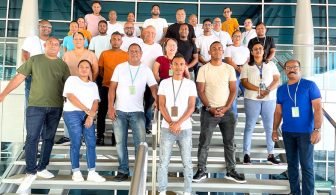


La Marine Conservation Award organisée par Sunlife a distingué le collège Impérial comme le grand gagnant de la compétition en juin 2024. Parmi plus de quarante participants, c’est ce groupe de trois jeunes garçons qui s’est démarqué avec un projet corallien spécifique, conçu et réalisé avec une passion inébranlable. Loveshanand Dussoye, Elaheebocus Isfaaq et Sakhabuth Nabeel qui sont en Lower Six ont remporté la première place grâce à leur projet novateur de nurserie de coraux. Inspirés par la détérioration des récifs coralliens le long des côtes mauriciennes, ils ont imaginé des tables à coraux fabriquées avec des méthodes DIY (do-it-yourself), visant à créer un véritable lien entre l’humain et l’écosystème marin.
« L’idée est à la fois simple et chaleureuse : proposer aux gens d’adopter des fragments de coraux avec notre assistance, puis les planter dans nos tables sous-marines avec l’aide d’un plongeur, en les cultivant et permettant à la personne de recevoir des données sur son fragment », ont expliqué les lauréats. Chaque fragment est suivi individuellement à l’aide de données collectées régulièrement, établissant ainsi un lien personnel avec les coraux et tout l’univers marin.
Leur approche durable vise à minimiser l’impact environnemental en utilisant efficacement les ressources disponibles. « Nous réutilisons les parties des coraux pour cultiver de nouveaux spécimens, assurant ainsi un cycle continu de croissance et de propagation », ont-ils ajouté. Le projet a été testé avec succès dans un aquarium et, soutenus par le Marine Conservation Award, ils prévoient maintenant de l’implanter à Belle Mare, où les conditions sont optimales pour sa réussite initiale. À long terme, ils envisagent d’étendre leur initiative à d’autres localités comme Flic en Flac, en intégrant des capteurs pour réguler la température et en favorisant la dispersion des coraux à travers l’île.
De son côté, Jehaan Yadallee, leur professeure de biologie, s’est dite ravie de voir le travail de ses étudiants récompensé. « Leur dévouement à développer et perfectionner ce projet a été exemplaire. Ils ont non seulement brillamment présenté leur projet mais sont également motivés à le faire évoluer vers de nouvelles phases ambitieuses. Ce projet est réalisable et significatif, surtout dans le contexte où nos récifs coralliens ne sont pas en bonne santé. Il mérite pleinement notre engagement. J’encourage vivement les jeunes à explorer la nature, que ce soit l’océan ou les forêts. Sortez et découvrez le monde, c’est ainsi que ces élèves ont été inspirés pour ce projet », a-t-elle déclaré.
Pour mener à bien le reste de leur projet, le groupe a reçu un soutien financier de Sunlife ainsi que le mentorat et l’accès aux Centres Marins du Long Beach et de La Pirogue. Ils bénéficieront également de l’appui et de l’expertise de trois jeunes biologistes marins qui mènent des études sur le lagon et suivent des espèces marines pour contribuer aux connaissances scientifiques et aux efforts de conservation.
Promising coral project: Imperial College wins Marine Conservation Award
The Marine Conservation Award organised by Sunlife named Imperial College as the overall winner of the competition in June 2024. Out of more than forty entrants, it was this group of three young boys who stood out with a specific coral project, conceived and realised with unwavering passion. Loveshanand Dussoye, Elaheebocus Isfaaq and Sakhabuth Nabeel, who are in Lower Six, won first place with their innovative coral nursery project. Inspired by the deterioration of coral reefs along the coast of Mauritius, they came up with coral tables made using DIY (do it yourself) methods, to create a real link between humans and the marine ecosystem.
« The idea is both simple and heart-warming: offer people the chance to adopt fragments of coral with our assistance, then plant them in our underwater tables with the help of a diver, cultivating them and allowing the person to receive data on their fragment », explained the winners. Each fragment is monitored individually with data collected regularly, establishing a personal link with the corals and the entire marine world.
Their sustainable approach aims to minimise environmental impact by efficiently using available resources. « We reuse coral parts to grow new specimens, ensuring a continuous cycle of growth and propagation, » they added. The project has been successfully tested in an aquarium and, supported by the Marine Conservation Award, they plan to set it up in Belle Mare, where the conditions are optimal for its initial success. In the long term, they plan to extend their initiative to other localities such as Flic en Flac, by integrating sensors to regulate temperature and encouraging the dispersion of corals across the island.
For her part, Jehaan Yadallee, their biology teacher, was delighted to see her students’ work rewarded. « Their dedication to developing and perfecting this project has been exemplary. Not only have they presented their project brilliantly, but they are also motivated to take it forward to ambitious new phases. This project is achievable and meaningful, especially in the context of our unhealthy coral reefs. It fully deserves our commitment. I urge young people to explore nature, whether the ocean or the forests. Get out and discover the world, that’s how these students have been inspired for this project », she declared.
To complete the rest of their project, the group has received financial support from Sunlife as well as mentoring and access to the Long Beach and La Pirogue Marine Centres. They will also benefit from the support and expertise of three young marine biologists who are conducting studies on the lagoon and tracking marine species to contribute to scientific knowledge and conservation efforts.